Loading...

Forging Quality Ingots

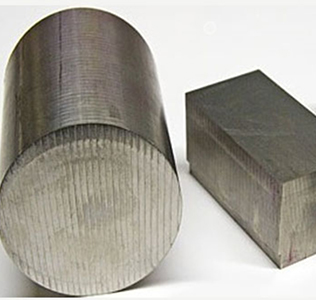
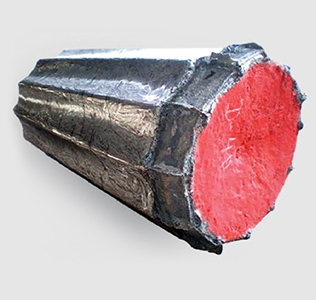
An ingot is a piece of relatively pure material, usually metal, that is cast into a shape suitable for further processing.[1] In steelmaking, it is the first step among semi-finished casting products. Ingots usually require a second procedure of shaping, such as cold/hot working, cutting, or milling to produce a useful final product. Non-metallic and semiconductor materials prepared in bulk form may also be referred to as ingots, particularly when cast by mold based methods.[2] Precious metal ingots can be used as currency (with or without being processed into other shapes), or as a currency reserve, as with gold bars.

Spring Steel

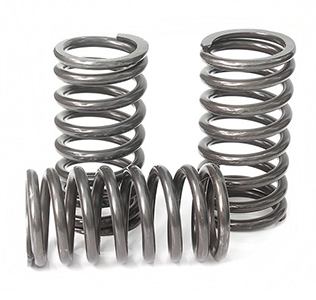
Spring steel is a name given to a wide range of steels[1] used in the manufacture of different products, including swords, saw blades, springs and many more. These steels are generally low-alloy manganese, medium-carbon steel or high-carbon steel with a very high yield strength. This allows objects made of spring steel to return to their original shape despite significant deflection or twisting.

Free & Semi Free Cutting Steel

Free machining steel is steel that forms small chips when machined. This increases the machinability of the material by breaking the chips into small pieces, thus avoiding entanglement in the machinery. This enables automatic equipment to run without human interaction. Free machining steel with lead also allow for higher machining rates. Free machining steel costs 15 to 20% more than standard steel, but this higher cost is offset by increased machining speeds, larger cuts, and longer tool life.

Micro Alloyed Steel

Microalloyed steel is a type of alloy steel that contains small amounts of alloying elements (0.05 to 0.15%), including niobium, vanadium, titanium, molybdenum, zirconium, boron, and rare-earth metals. They are used to refine the grain microstructure or facilitate precipitation hardening.

Bearing Steel

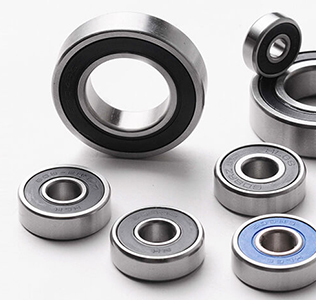
A bearing is a machine element that constrains relative motion to only the desired motion, and reduces friction between moving parts. The design of the bearing may, for example, provide for free linear movement of the moving part or for free rotation around a fixed axis; or, it may prevent a motion by controlling the vectors of normal forces that bear on the moving parts. Most bearings facilitate the desired motion by minimizing friction. Bearings are classified broadly according to the type of operation, the motions allowed, or to the directions of the loads (forces) applied to the parts.

Cold Forging Quality Steel

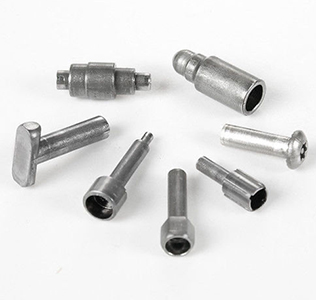
Cold forging is a metal shaping & manufacturing process in which bar stock is inserted into a die and squeezed into a second closed die. The process, completed is at room temperature or below the metal‘s recrystallization temperature to form a metal into a desired shape or configuration.

Engine Valve Steel

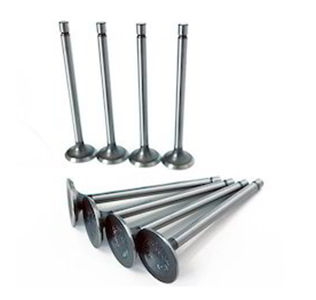
The intake valves are mainly made of chrome, nickel, or tungsten steel, and the exhaust valves are primarily made of high heat resistant metals such as nichrome, silicon-chromium, or cobalt-chromium alloys.

Stainless Steel Rebar

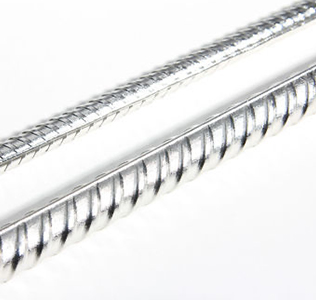
Rebar (short for reinforcing bar), known when massed as reinforcing steel or reinforcement steel,[1] is a steel bar or mesh of steel wires used as a tension device in reinforced concrete and reinforced masonry structures to strengthen and aid the concrete under tension. Concrete is strong under compression, but has weak tensile strength. Rebar significantly increases the tensile strength of the structure. Rebar's surface is often "deformed" with ribs, lugs or indentations to promote a better bond with the concrete and reduce the risk of slippage.

Stainless Steel

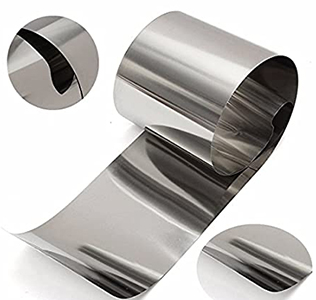
Stainless steel[1][2][3]: 276  is any one of a group of ferrous alloys that contain a minimum of approximately 11% chromium,[4]: 3 [5] a composition that prevents the iron from rusting and also provides heat-resistant properties.[4]: 3 [5][6][7][8] Different types of stainless steel include the elements carbon (from 0.03% to greater than 1.00%), nitrogen, aluminium, silicon, sulfur, titanium, nickel, copper, selenium, niobium, and molybdenum.

Super Alloys

A superalloy, or high-performance alloy, is an alloy with the ability to operate at a high fraction of its melting point.[1] Several key characteristics of a superalloy are excellent mechanical strength, resistance to thermal creep deformation, good surface stability, and resistance to corrosion or oxidation.

Tool Steels

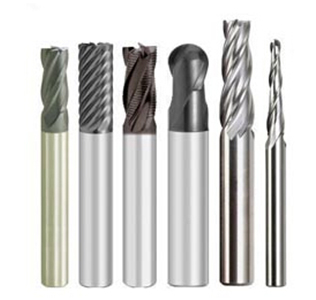
Tool steel is any of various carbon steels and alloy steels that are particularly well-suited to be made into tools and tooling, including cutting tools, dies, hand tools, knives, and others. Their suitability comes from their distinctive hardness, resistance to abrasion and deformation, and their ability to hold a cutting edge at elevated temperatures. As a result, tool steels are suited for use in the shaping of other materials, as for example in